
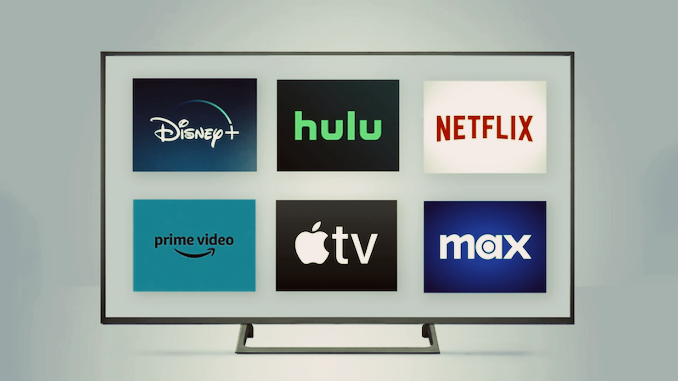
Media giants in the highly competitive streaming market are grappling with subscriber churn, rising content costs, and profitability. As they transition from traditional models to streaming, these companies face increasing pressure to prove the long-term sustainability of their digital transition.
The following five-part article series looks at how the major streaming services compare in terms of financial performance, subscriber numbers, and the unique strengths and challenges each faces in the ever-evolving streaming industry, continuing with a review of Netflix’s biggest competitors, Disney+ and Max. [Part One here] and [Part Two here]
Streaming Snapshot: Disney+ (Including Hulu and ESPN+)
- Subscribers:
- Disney+: 118.3 million (+700,000)
- Hulu: 51.1 million (+900,000 SVOD subscribers)
- ESPN+: 24.9 million (+100,000)
- ARPU:
- Disney+ domestic: $7.74 (-3%)
- Hulu SVOD: $12.87 (+8%)
- ESPN+: $6.23 (+14%)
- Key Strategies:
- Focus on bundling Disney+, Hulu, and ESPN+.
- Price hikes and the introduction of ad-supported tiers.
- Targeting streaming profitability through cost-cutting, content write-offs, and password-sharing crackdowns.
Disney+ Focuses on Core Brands and Bundling to Achieve Streaming Success
Disney+, along with Hulu and ESPN+, remains one of Netflix’s biggest competitors, boasting 153.8 million global subscribers, including a 200,000 increase in the latest quarter. However, the platform still trails Netflix, with its ARPU of $7.74 falling significantly below Netflix’s U.S. figures. Subscriber churn in the Hotstar market has also slowed Disney+’s overall growth.
Despite these obstacles, Disney has made progress toward profitability. In the third quarter of 2024, the company reported its first combined streaming profit of $47 million, primarily driven by ESPN+’s performance. However, both Disney+ and Hulu continue to operate at a loss, though the gap is narrowing. Disney has raised subscription prices, introduced ad-supported tiers, and begun cracking down on password-sharing to drive sustained profitability.
Disney’s strategy centers on its vast content library. Although Disney+ and Hulu faced losses in 2023, their path to profitability is more apparent as the financial gap shrinks. The company also incurred a $1.023 billion loss in 2022 after ending several licensing deals to focus on its in-house streaming services.
Despite short-term setbacks, Disney’s focus on its core franchises—Marvel, Pixar, and Star Wars—has spurred subscriber growth and retention. Disney aims to achieve full streaming profitability by the end of this year.
Add real-world pricing context to this film and television market analysis.
FilmTake’s Global Rights Suite combines both the Film Licensing Index and Film Advance Index into one rights-pricing package for film and television executives evaluating licensing and streaming values, Pay-1 economics, minimum guarantees, presales, and international advance structures.
However, Disney+ has experienced significant drops in satisfaction regarding the quality and variety of its original series, with a 7-point decline in both categories—the largest among all SVOD platforms, according to Whip Media’s 2023 U.S. Streaming Satisfaction Survey. Although 77% of respondents remain satisfied with the quality and 71% with the variety, these declines highlight the platform’s current challenges. Despite holding onto its #4 ranking in both areas, Disney+ has grappled with subscriber losses and over $11 billion in streaming-related financial setbacks since its launch in 2019.
Looking ahead, Disney is focusing on bundling its services and leveraging its content library for further growth. While Hulu remains confined to the U.S. and Japan, plans to integrate ESPN+ into Disney+ and expand internationally are central to its strategy. Catching up to Netflix remains difficult, particularly with Disney’s lower ARPU in key markets, but the company is positioning itself for sustained growth and profitability.
Streaming Snapshot: Warner Bros. Discovery (Max)
- Subscribers: 103.3 million Globally (+3.6 million)
- Domestic: 52.4 million
- International: 50.8 million
- ARPU:
- Domestic: $12.08
- International: $3.85
- Global: $8
- Key Strategies:
- Expanding Max into international markets, including the U.K. and Germany, by 2026.
- Leveraging partnerships with international distributors to accelerate growth.
- Continued price increases and bundling to reduce churn and improve profitability.
Warner Bros. Discovery Fights for Stability and Strategic Moves
Since its merger, Warner Bros. Discovery (WBD) has grappled with significant financial challenges, particularly in its direct-to-consumer (DTC) division. While the company saw profits in 2023 and early 2024, it reported a $107 million loss in the most recent quarter, highlighting the instability of its streaming business. Max, WBD’s flagship streaming platform, is available in 65 international markets but has yet to enter essential territories like the UK, Germany, and Italy.
WBD’s subscriber base is 103.3 million, with a domestic ARPU of $12.08, placing it third among the major streaming platforms. However, international ARPU is much lower at $3.85, underscoring WBD’s difficulties in achieving profitability outside the U.S.
WBD is taking steps to maximize the value of its content library, with strategic efforts like producing shows such as “Ted Lasso,” which engages audiences across multiple platforms. The company is also focused on bundling Max with other platforms, such as Disney+ and Hulu while exploring new international growth opportunities.
According to Whip Media’s 2023 U.S. Streaming Satisfaction Survey, Max held on to its #1 position and simultaneously experienced its most significant decline in overall satisfaction among all SVODs, falling -6 points to 88% from 94% last year. Max carries strength in the quality of its original programming and is still ranked #1 for a second year in a row despite declining -3 points.
In 2023, WBD turned around its financial performance with a modest streaming profit of $103 million, a significant improvement from a $2.1 billion loss the previous year. This progress was driven by increased ad-tier subscriptions and pricing strategies. Still, WBD faces challenges, especially as it manages its debt and prepares to expand Max into new markets.
WBD focuses on reducing churn through bundling and international expansion to strengthen its financial position. The company has also raised prices for ad-supported and ad-free tiers, resulting in better-than-expected churn rates. However, maintaining profitability remains a challenge as the company deals with competition and the complexities of its post-merger operations.
FilmTake Away: The Future of Streaming: Profitability or Bust?
Each major player in the streaming space is tackling the profitability challenge differently, from Netflix’s focus on scaling its ad-supported tiers to Disney’s bundling strategy and WBD’s international expansion. The race is no longer just about who can acquire the most subscribers but who can maximize revenue and minimize costs in an environment where content creation is expensive and consumer expectations are high.
Reported European interest in Lionsgate highlights the value of studio libraries, platform scale, and film rights that can travel across markets.
Continue Reading Lionsgate Sale Process Puts Library Value to the Test
When the cinema lights go down and the credits roll, it becomes clear that the major studio theatrical business is no longer a reliable growth engine. Yes, the occasional billion-dollar franchise still lands. But beneath the surface lies a shrinking marketplace, fewer wide releases, and an exodus of mid-budget films with nowhere to land.
Continue Reading From Blockbusters to Bust: Why Hollywood Hasn’t Bounced Back
Streaming licensing is becoming more selective as platforms price films by window, territory, exclusivity, performance history, and platform utility. The market has not stopped buying films, but buyers now need clearer economic justification for each rights acquisition.
Continue Reading Netflix Denies Lionsgate Talks: What the Market Is Really Pricing