
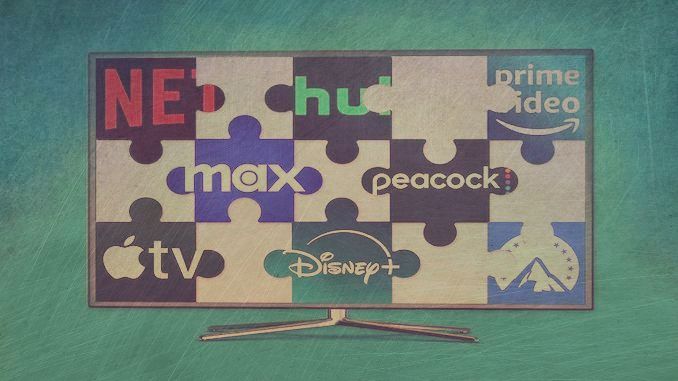
Recent developments in streaming, like Comcast’s StreamSaver bundling Peacock, Apple TV+, and Netflix, indicate a significant shift towards the future of entertainment: streaming bundles.
The bundling trend is gaining traction at the top and bottom of the streaming market. A new sports-streaming service called Venu, a joint venture by Fox, Warner Bros. Discovery, and Disney, aims to consolidate sports rights under one roof, launching this fall. AMC Networks offers AMC+ memberships that include Shudder, Acorn TV, and Sundance Now.
Several studies across ten countries have found that over 85% of respondents were interested in an app that managed all their subscriptions through a single platform. These findings highlight a robust demand for such services, indicating that telecom companies could dominate this space since they are the largest providers of internet to homes in the U.S.
The Next Wave of Streaming Bundles
Streaming bundles aren’t entirely new, but the intensity with which companies have embraced them in the last two years certainly is. StreamSaver, despite its unremarkable name, promises substantial savings for consumers. While details on pricing and launch dates are still under wraps, the concept is clear: attract and retain subscribers by offering more value for less money.
Disney is also expanding its bundling options with a new Summer 2024 bundle that includes Disney+, Hulu, and Max. The existing Disney Bundles, which offer combinations of Disney+, Hulu, and ESPN+, have already proven successful, with savings of up to 40% compared to subscribing to each service individually.
Despite integration challenges, there are compelling reasons why both Hollywood and Silicon Valley are embracing the bundling trend. Bundles are an effective way to reduce churn, the industry term for subscribers canceling their memberships, and reduce subscriber acquisition costs. With the lowest churn rate in the industry, Netflix is an attractive partner for bundles due to its strong subscriber retention.
Additionally, bundles allow companies to gather more extensive data on viewer habits, which is increasingly valuable in today’s digital economy. They can share marketing costs and appeal to a broader audience, particularly on ad-supported tiers. For consumers, bundles can simplify billing and offer significant savings reminiscent of traditional cable packages before they became unaffordable.
Verizon’s Strategic Move: Pioneering the Future of Streaming Aggregation
In an era where convenience and consolidation are key drivers for consumer choices, Verizon’s latest initiative, myHome, is a bold stride towards establishing itself as the premier streaming bundler. Echoing Netflix’s groundbreaking success in the streaming space, Verizon’s strategic maneuvering suggests it aims to become the go-to platform for managing diverse streaming subscriptions.
Verizon recently launched myHome, a program to integrate discounted streaming subscriptions with its home internet services. This initiative mirrors its myPlan mobile offering, allowing customers to bundle various streaming services with their internet plans. This initiative is not just another bundling strategy; it signals Verizon’s ambition to dominate the SVOD aggregation landscape.
Add real-world pricing context to this film and television market analysis.
FilmTake’s Global Rights Suite combines both the Film Licensing Index and Film Advance Index into one rights-pricing package for film and television executives evaluating licensing and streaming values, Pay-1 economics, minimum guarantees, presales, and international advance structures.
Verizon emphasizes that myHome would enable customers to manage more entertainment subscriptions through +play, its virtual marketplace. This marketplace allows users to manage and consolidate their streaming subscriptions, setting Verizon apart from its competitors. The potential of myHome to funnel customers into +play is a strategic advantage that Verizon is keen to exploit.
Since its launch, +play has positioned Verizon as a unique player among telecom companies by offering customers a platform to manage à la carte SVOD plans. Unlike other wireless carriers, Verizon’s +play marketplace has no direct competitors, giving it a significant edge in attracting and retaining customers.
The results speak for themselves. Since the introduction of +play in Q1 2023, Verizon has seen a year-over-year increase in gross postpaid phone additions every quarter. While this growth cannot be solely attributed to +play, it is clear that Verizon’s strategy of packaging streaming subscriptions with its services is highly effective. The popularity of myPlan, which garnered over 13 million subscribers in just six months, further underscores this point.
As telecom companies continue to bundle SVOD services with their broadband offerings, they are positioning themselves as key players in the streaming marketplace. The Paramount-Charter deal is a clear indicator of the growing influence of broadband providers in the streaming industry.
Streaming Bundle Types
Direct-to-Consumer Bundling
- Hard Bundle
When multiple streaming apps are bundled into a single interface, Paramount's internal bundling of Paramount+ and Showtime is an example of a hard bundle. - Soft Bundle
When multiple services are available under a combined subscription plan but via different interfaces, an example is Disney's internal subscription for Disney+, ESPN+, and Hulu.
Wholesale Distribution
- Retail Aggregation
The most common retail aggregators offer multiple streaming services available under through one provider with streamlined billing. These aggregators include Amazon Prime Channels and Roku Channels. - Broadband Bundles
These bundles allow customers to subscribe and pay via a pre-existing phone, cable, or broadband provider. Charter subscribers, for example, can add a Disney bundle. - Wireless Bundles
Often, these bundles are promotional offers for mobile and wireless providers to add SVOD service at a discount usually for a pre-determined amount of time. Examples include adding Netflix via T-Mobile.
FilmTake Away: For Many Integration Challenges Remain
Despite their appeal, these emerging bundles often fail to address the integration issue. Unlike the seamless integration seen with Paramount+ and Showtime, many new bundles keep services separate, leaving the content-discovery problem unsolved. This separation means that finding something to watch across multiple platforms remains challenging for consumers.
Verizon's foray into streaming aggregation with +play and myHome marks a significant evolution in the telecom and streaming industries. By integrating various services into a cohesive offering, Verizon is positioning itself as a possible leader in the digital bundling era.
As streaming continues to grow and evolve, Verizon's strategic initiatives may well make it the "Netflix" of streaming bundlers, pioneering a new era of digital convenience and connectivity.
Streaming licensing is becoming more selective as platforms price films by window, territory, exclusivity, performance history, and platform utility. The market has not stopped buying films, but buyers now need clearer economic justification for each rights acquisition.
Continue Reading Netflix Denies Lionsgate Talks: What the Market Is Really Pricing
Streaming licensing is becoming more selective as platforms price films by window, territory, exclusivity, performance history, and platform utility. The market has not stopped buying films, but buyers now need clearer economic justification for each rights acquisition.
Cannes 2026 Market Tracker follows the packages, presales, acquisitions, buyer behavior, and rights-pricing signals shaping the independent film market. This tracker highlights how distributors are weighing prestige, commercial clarity, audience demand, and territorial value before committing to new films.
Netflix’s Cannes acquisitions reveal how streamer strategy has moved from broad international buying to selective rights deals built around awards potential, animation, stars, theatrical corridors, and global platform value.
Continue Reading Netflix’s Cannes Buying History Shows What Streamers Want