

Toronto has built the market infrastructure. The harder question is whether buyers will use it on a calendar that matters less than it once did. Early TIFF conversations point to selective spending, longer deal cycles, and a sharper premium on projects with a clear audience and distribution path.
The return of Obsession hangs over the market as both inspiration and warning. Its extraordinary breakout has buyers looking for originality and younger theatrical audiences, while new distribution ventures and specialty labels are opening additional routes to market. TIFF now has to prove that a formal September market can convert those signals into useful transactions before AFM.
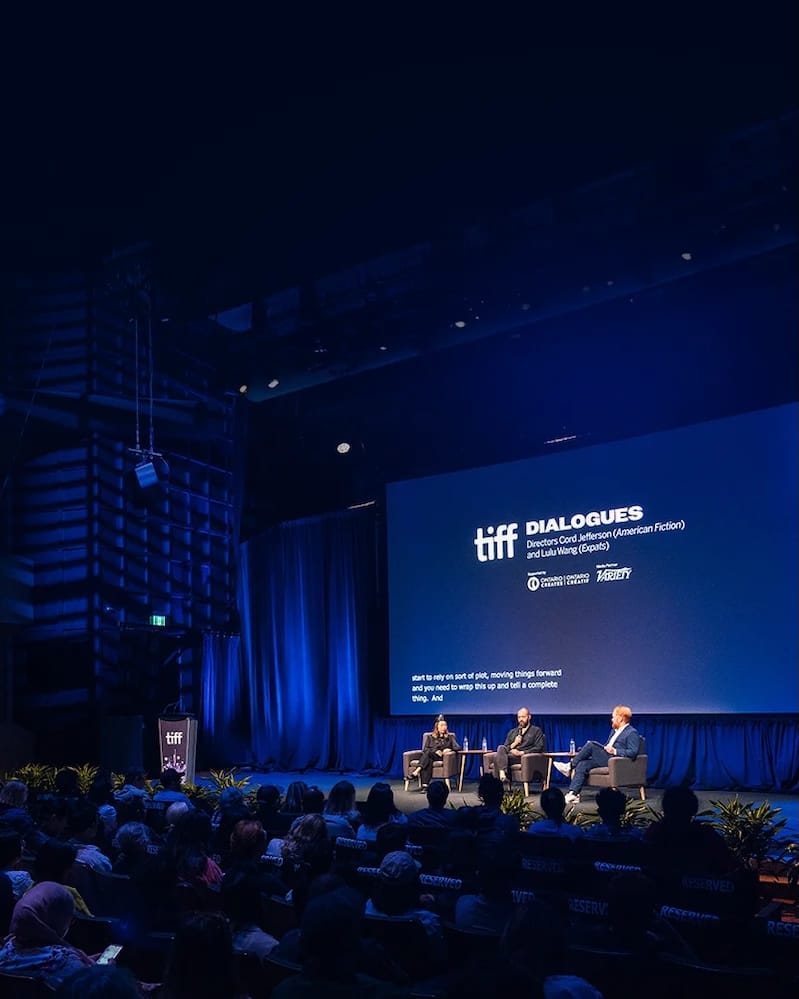
The first weekend of TIFF’s new formal market has made one thing clear. Toronto no longer has to explain whether it has an industry market. The physical infrastructure is here, the buyer base is here, and the sales community has shown up. The Metro Toronto Convention Centre is now part of the festival geography, backed by more than 225 exhibitors and an industry attendance expected to reach roughly 6,000.
The more important question is economic. Buyers are arriving in Toronto after several years of slower closing cycles, tighter acquisition mandates, and more selective theatrical spending. TIFF has reported more than 800 buyers in attendance, including up to 200 first time or returning attendees supported by the market. That expands the room. It does not automatically loosen the restrictive economics.
This distinction matters because the market calendar has already changed around TIFF. Buyers increasingly work across Berlin, Cannes, Toronto, and AFM rather than allocating a fixed pool of capital to each stop. Mubi distribution executive Arianna Bocco and Manifest Pictures cofounder Zach Glueck described buyers as having decoupled budgets from individual markets. Deals start in one place, move through another, and close when the commercial case is ready.
A Market Floor Does Not Create a Buying Cycle
The timing remains the first challenge. The Market opens only six weeks before AFM, and some parts of the independent sector have questioned whether another formal sales event is what the business needs. Venice Production Bridge chief Pascal Diot made that case directly before Toronto opened, arguing that the industry does not need another market competing for the same executives and attention.
The skepticism is useful because it sets the right standard. Attendance alone will not establish Toronto as a permanent transaction point. The value of the market will be measured by whether projects that arrive with financing gaps, unsold territories, distribution needs, or incomplete packages leave in a better position than they entered.
Toronto does have one structural advantage. TIFF already concentrated buyers, sellers, filmmakers, press, and public audiences in the same week. The official market adds scheduled meeting space, a larger exhibitor base, private screenings, project meetings, and a subsidized buyer cohort to activity that was previously spread across hotel suites, restaurants, screenings, and informal conversations. The new system does not replace the old TIFF market behavior. It gives that behavior a center.
Follow the Deals Moving Through Toronto
FilmTake’s TIFF 2026 Market Tracker now follows 40 current titles across sales representation, acquisitions, presales, financing, territorial rights, and market positioning.
The latest activity includes new packages such as Otherwise Engaged, Honeymoon/Funeral, Rode To Ruin, Jonah, Bluefly, and Copperhead, alongside completed film deals and territory sales on titles including Scorpion, All About Corinne, The Heroes of the Louvre, and Lemonade.
Obsession Is the Wrong Benchmark but the Right Signal
No title is shaping buyer psychology in Toronto more than last year’s Obsession. Curry Barker’s horror film cost about $750,000, sold to Focus Features for roughly $15 million after TIFF, and has since generated more than $500 million worldwide. Barker and star Inde Navarrette returned to Toronto this week for what amounts to a victory lap.
The numbers make Obsession a dangerous comparable. A result that extreme cannot support ordinary acquisition assumptions. Its usefulness lies elsewhere. Buyers saw an inexpensive, original film without conventional star dependence turn into a large theatrical event. That result has changed the conversation around what commerciality can look like in the independent market.
Many sources are reporting that buyers entering TIFF are placing greater weight on originality and Gen Z appeal. The logic is visible in the titles still seeking distribution. The market includes horror, comedy, romance, auteur work, and films with established talent, but the common question is increasingly specific: who will leave home and pay to see this?
That is a more demanding test than attaching recognizable cast and waiting for the package to clear a familiar valuation range. Younger audiences have shown that they will support theatrical films when the proposition feels distinct. Buyers are responding by looking for projects that can generate identity, conversation, and urgency before release.
The Buyer Case Is Becoming More Specific
The first days of TIFF show several forces converging around the same issue: distribution capital is available, but the path from project to audience has to be clearer.
| Signal | Evidence | Commercial Reading |
|---|---|---|
| TIFF Market | Roughly 6,000 industry attendees, more than 800 buyers, and more than 225 exhibitors | Toronto has achieved market scale. The next test is transaction quality and follow through. |
| Obsession | About $750,000 production cost, roughly $15 million acquisition, more than $500 million worldwide gross | Originality, disciplined cost, and younger audience demand can create exceptional upside outside traditional star economics. |
| Buyer Budgets | Acquisition spending is increasingly decoupled from individual market dates | Toronto can advance a deal without closing it. Market value depends on movement through the cycle, not signatures before departure. |
| Leawood Films | AMC is launching a distribution label for fully financed and completed small and medium sized films | Exhibition is creating another distribution route for independent product that can support a credible theatrical release. |
| Avengers: Doomsday | More than $50 million in domestic advance ticket sales three months before release, with 70 percent in premium formats | Audience demand remains powerful when the event proposition is clear. The independent market is searching for smaller projects with equally legible audience intent. |
Distribution Is Reassembling Around the Theatrical Middle
TIFF is opening against an unusual distribution backdrop. Several major studio films have bypassed the fall festivals, continuing a shift away from using Venice, Telluride, or Toronto as an automatic launch pad for adult studio releases. At the same time, specialty distribution is adding capacity.
AMC Theatres is entering distribution through Leawood Films, a new label focused on fully financed or completed small and medium sized films. The venture combines exhibition, marketing, and distribution experience and is expected to begin releasing films in 2027 or 2028. AMC has indicated theatrical windows of at least 45 days before premium video on demand and at least 90 days before subscription streaming.
Warner Bros. also used the opening days of TIFF to promote Clockwork, its new specialty label, with Mike De Luca and Pam Abdy appearing at the market. The activity is notable because the theatrical middle has spent years losing dependable studio supply. New labels now have an incentive to find films that can fill that space without carrying the cost structure of a major franchise release.
For independent producers, that does not mean easier sales. It means the distribution map is becoming more varied. A project can now be evaluated by traditional specialty distributors, streamers, studio labels, independent buyers, and in AMC’s case an exhibitor moving directly into distribution. Each buyer has a different window strategy, cost tolerance, audience target, and downstream requirement.
Audience Intent Is the Scarce Asset
The contrast with Avengers: Doomsday is useful as long as the terminology stays clear. Disney’s $50 million figure refers to advance ticket sales, not film rights presales. It is still relevant to Toronto because it demonstrates how early and how visibly theatrical demand can form when audiences understand the event.
Disney reported that 70 percent of those advance tickets were sold for premium formats. The scale is unique to Marvel, but the underlying signal reaches beyond franchise cinema. Theatrical value improves when the audience proposition is specific enough to motivate an early purchase, a premium format, or a social reason to attend.
TIFF is leaning into the same audience change from the festival side. Programming leadership has emphasized younger and more globally minded viewers, while buyers interviewed before the market repeatedly returned to Gen Z. That gives Toronto a useful combination of public audience response and concentrated industry attention. The market can see what plays, but buyers still have to decide whether that response travels beyond King Street.
One Integrated View of Screen Rights Value
Global Screen Rights Intelligence combines film and episodic licensing rates, film advance data, territory ranges, forward estimates, methodology, and market evidence in one integrated package.
What Toronto Has to Prove by Wednesday
The market closes September 16. By then, the useful measure will not be a count of deals announced in Toronto. The first edition should be judged by whether financing discussions became commitments, whether unsold territories found credible buyers, whether new projects secured representation, and whether buyers who had stopped attending TIFF found enough value to return.
Deal velocity also matters. If Toronto simply adds another week of meetings to negotiations that still wait for AFM, the calendar becomes more crowded without becoming more efficient. If projects can use Toronto to reset pricing, close financing gaps, test buyer appetite, and narrow the list of realistic territories before November, the market has a defensible role.
That role may ultimately be different from Cannes or AFM. Toronto has a large public festival, real audience reaction, North American press concentration, and an acquisition culture that already existed before the formal market opened. Its best case is to use those existing strengths to make September more productive for projects already moving through the annual sales cycle.
FilmTake Away
TIFF has solved the infrastructure question. Toronto now has the buyer base, exhibitor footprint, project market, meeting space, and public festival needed to operate as a formal industry market. The commercial test is harder. Buyers no longer organize spending around a single market, acquisition cycles are longer, and theatrical demand is concentrating around projects with a clear audience proposition. Obsession shows the upside when originality, cost, and audience intent align. Leawood Films and new specialty labels show that distribution capacity is still being created. TIFF will matter if it can connect those two sides of the equation and move viable projects through the cycle faster.
Sources
Screen International, September 8, 2026; IndieWire, TIFF market preview; TheWrap, September 9, 2026; TheWrap, September 9, 2026; Screen International, September 10, 2026; Variety, September 4, 2026; Variety, August 31, 2026; TheWrap, September 9, 2026; Associated Press, September 11, 2026; Reuters, September 9, 2026.